Sexually Transmitted Infections (STIs): Sexually Transmitted Diseases (STDs) - Cleveland Clinic
What are the symptoms of sexually transmitted infections?
Symptoms of sexually transmitted infections (sexually transmitted diseases) vary by type. You might not have any symptoms. If you do have symptoms, they may appear around your genital region and could include:
- Bumps, sores or warts on or near your penis, vagina, mouth or anus.
- Swelling or severe itching near your penis or vagina.
- Discharge from your penis.
- Vaginal discharge that has a bad odor, causes irritation or is a different color or amount than usual.
- Vaginal bleeding that's not your period.
- Painful sex.
- Painful urination or frequent urination.
In addition, you may also have symptoms throughout your body, including:
- A skin rash.
- Weight loss.
- Diarrhea.
- Night sweats.
- Aches, pains, fever and chills.
- Jaundice (yellowing of your skin and whites of your eyes).
What causes sexually transmitted infections?
Sexually transmitted infections develop when various bacteria, viruses or parasites infect your body. You can get these microorganisms from bodily fluids (like blood, urine, semen, saliva and other mucous-lined areas) during sex — usually vaginal, oral and anal sex or other sexual activities.
Advertisement
Are sexually transmitted infections contagious?
Yes, sexually transmitted infections (sexually transmitted diseases) are contagious. Most STIs pass from person to person by sexual contact through bodily fluids or from skin-to-skin contact by touching the infected part of a person's body, usually the genitals. Some STIs, like syphilis, can spread while giving birth to a baby.
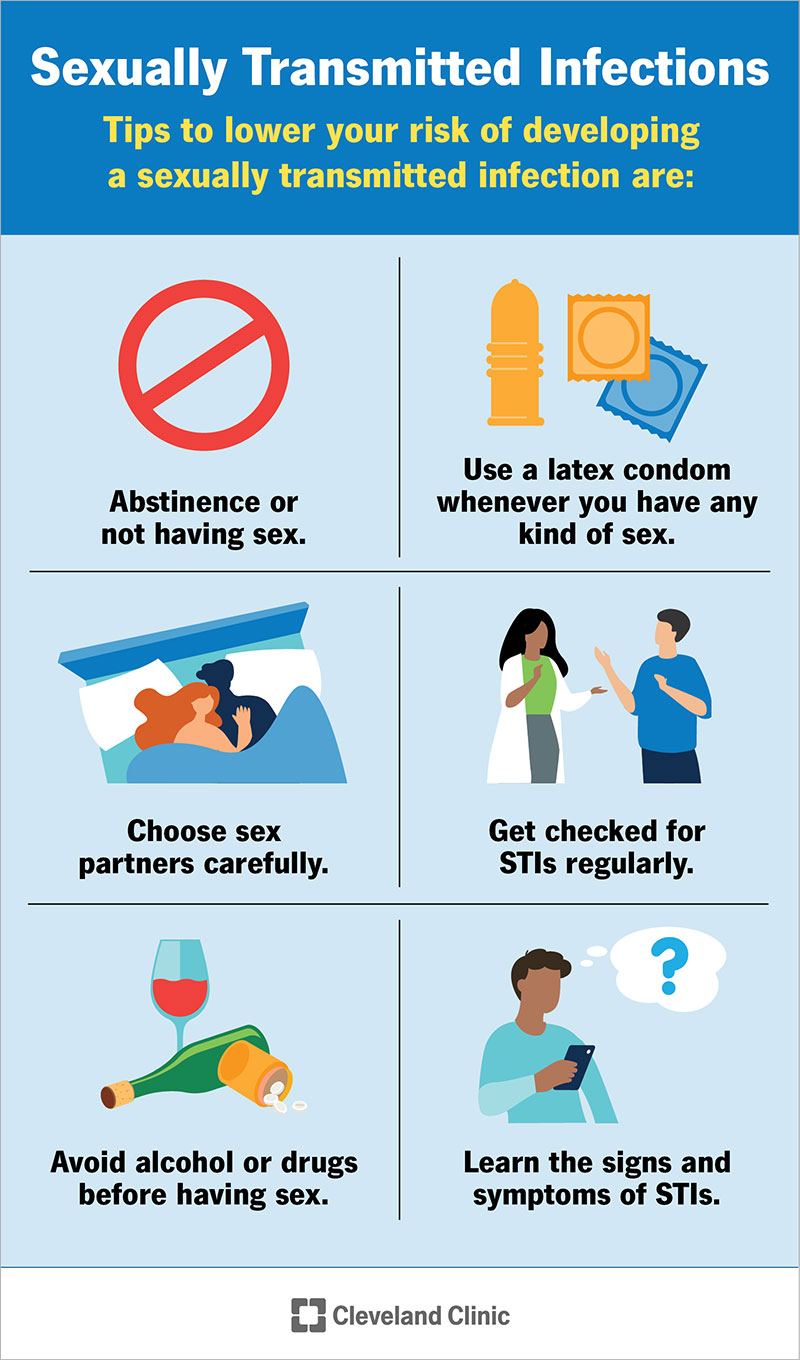
If you have an STI, it's important to visit a healthcare provider to receive treatment. Some STIs are curable. You can prevent the spread of STIs by getting tested regularly if you're sexually active, talking to your sexual partners about your diagnosis and using protection during sex.
What are the risk factors for sexually transmitted infections?
If you're sexually active, you're at risk of developing a sexually transmitted infection (sexually transmitted disease).
You can also get an STI if you share personal items like needles that contain your blood. This may occur in the following instances:
- Unregulated tattoos.
- Unregulated piercings.
- Sharing needles while using intravenous drugs (substance use disorder).
A lack of communication due to stigma or shame about having an STI can put you and your partner(s) at a greater risk of spreading the infection. Before having sex, you should ask your partners the following questions:
- Do you have an active STI?
- When was your last STI test?
- Are you currently being treated for an STI?
- Do you consistently use protection with your sexual partners?
Asking these questions can help you protect yourself.
It's common to feel strong emotions after an STI diagnosis. You might want to avoid telling your sexual partner because you feel embarrassed. Being open and honest with your sexual partners helps build trust and understanding. If you have an STI, you can reduce the risk of spreading the infection to your sexual partner(s) by talking it over with them before engaging in sexual activities.
What are the complications of sexually transmitted infections?
Sexually transmitted infections can cause lifelong complications if left untreated. Common complications from untreated STIs include the following:
- HIV can lead to AIDS.
- Syphilis can damage your organs, nervous system and infect a developing fetus.
- Risk of spreading STIs to your sexual partners.
STI complications for women or people assigned female at birth (AFAB) include:
In men or people assigned male at birth (AMAB), untreated STIs can lead to:
- Infections in the urethra and prostate.
- Swollen, sore testicles.
- Infertility.
Comments
Post a Comment